Corporate Documentary
Usually provides deeper context, multiple perspectives and a structured narrative. It may cover company history, leadership, employees, operations, community impact or long-term development.
Professional Corporate Storytelling
NUR Technology Solutions helps organizations communicate their history, capabilities, people, operations, products and brand story through professionally planned corporate documentaries and business videos. Our service can include discovery, research, scripting, interviews, workplace filming, editing, sound, motion graphics, captions and delivery versions for websites, presentations, events and corporate communications.
NUR Technology Solutions produces corporate documentaries and business videos that combine strategic storytelling, professional filming, executive interviews, workplace coverage and polished post-production for websites, presentations, events and corporate communications.
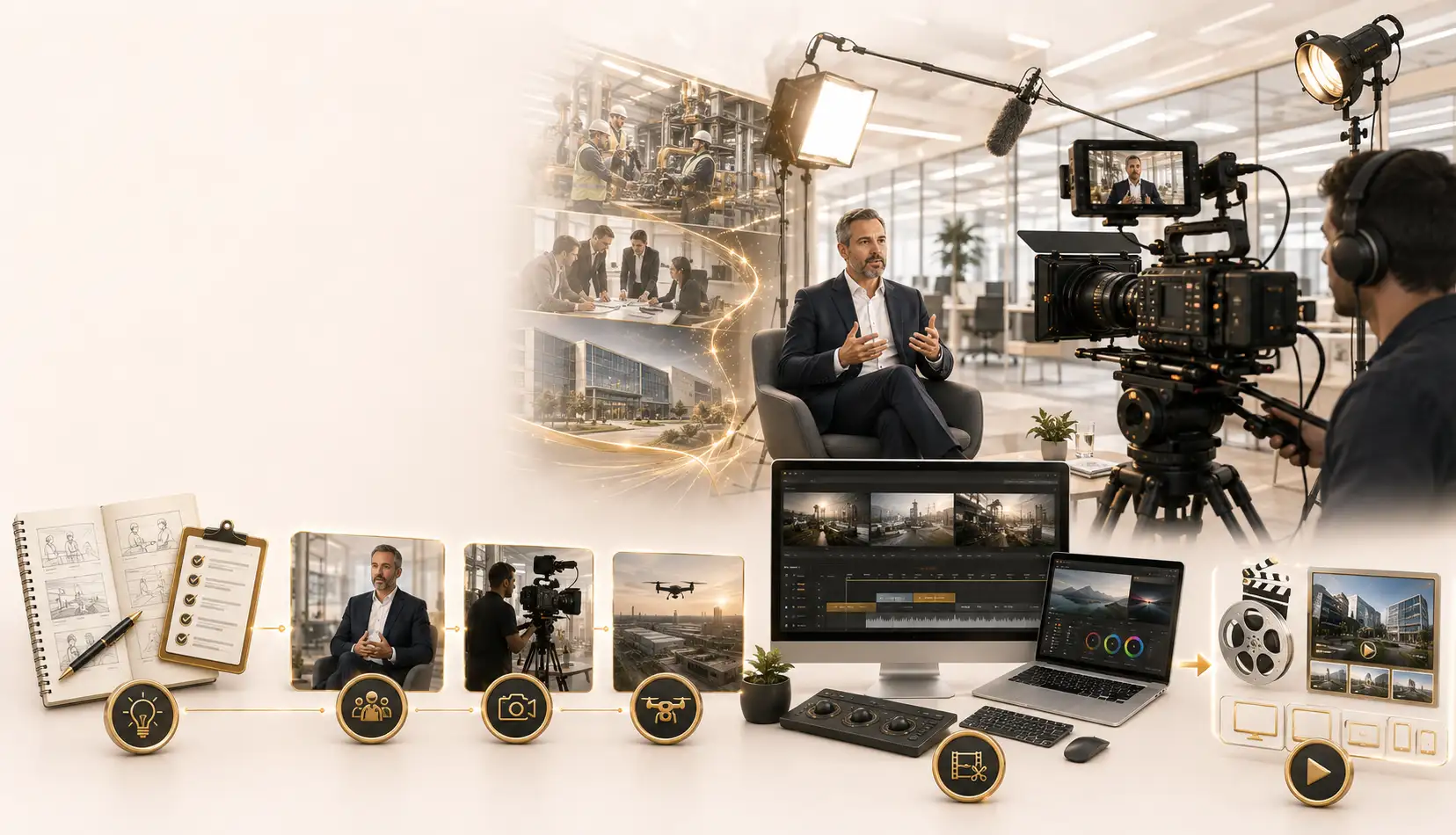
Professional corporate storytelling from discovery and filming through editing and final delivery.
Business Documentary Production
Corporate documentary production uses documentary techniques to explain an organization, its history, people, operations, capabilities, development or impact. The final film may combine interviews, observational workplace footage, archival material, narration, graphics and supporting scenes.
Usually provides deeper context, multiple perspectives and a structured narrative. It may cover company history, leadership, employees, operations, community impact or long-term development.
Commonly uses a shorter, more direct format focused on a specific product, service, campaign, announcement or call to action.
Either format may be appropriate depending on the audience, message, platform, available material and intended use. A corporate documentary is not required for every communication need.
Production Capabilities
Present the organization, history, people, locations, products, services, capabilities and future direction in a clear business format.
Combine interviews, workplace footage, archival material, narration and operational scenes into a structured long-form company story.
Communicate purpose, identity, values, development and customer relevance through a focused narrative.
Support leadership messages, strategic updates, founder stories, annual communications and corporate announcements.
Show employee experiences, workplace culture, teamwork, professional development and organizational values.
Document factories, production lines, warehouses, laboratories, logistics and approved operational environments.
Explain products, manufacturing stages, service workflows, technical procedures and operational capabilities.
Cover conferences, launches, exhibitions, seminars, ceremonies, meetings and internal business events.
Present workplace culture, facilities, teams, values and career opportunities for approved recruitment communication.
Support onboarding, safety, policies, procedures, systems training and management communication.
Capture authorized customer, partner or stakeholder perspectives without guaranteeing positive statements.
Present programs, research, facilities, student experiences, institutional history and community impact.
Leadership Communication
Interview-led storytelling can add credibility, context and a human perspective to a corporate film. We plan interview topics around the communication goal and help participants understand the intended audience, setting and subject areas before filming.
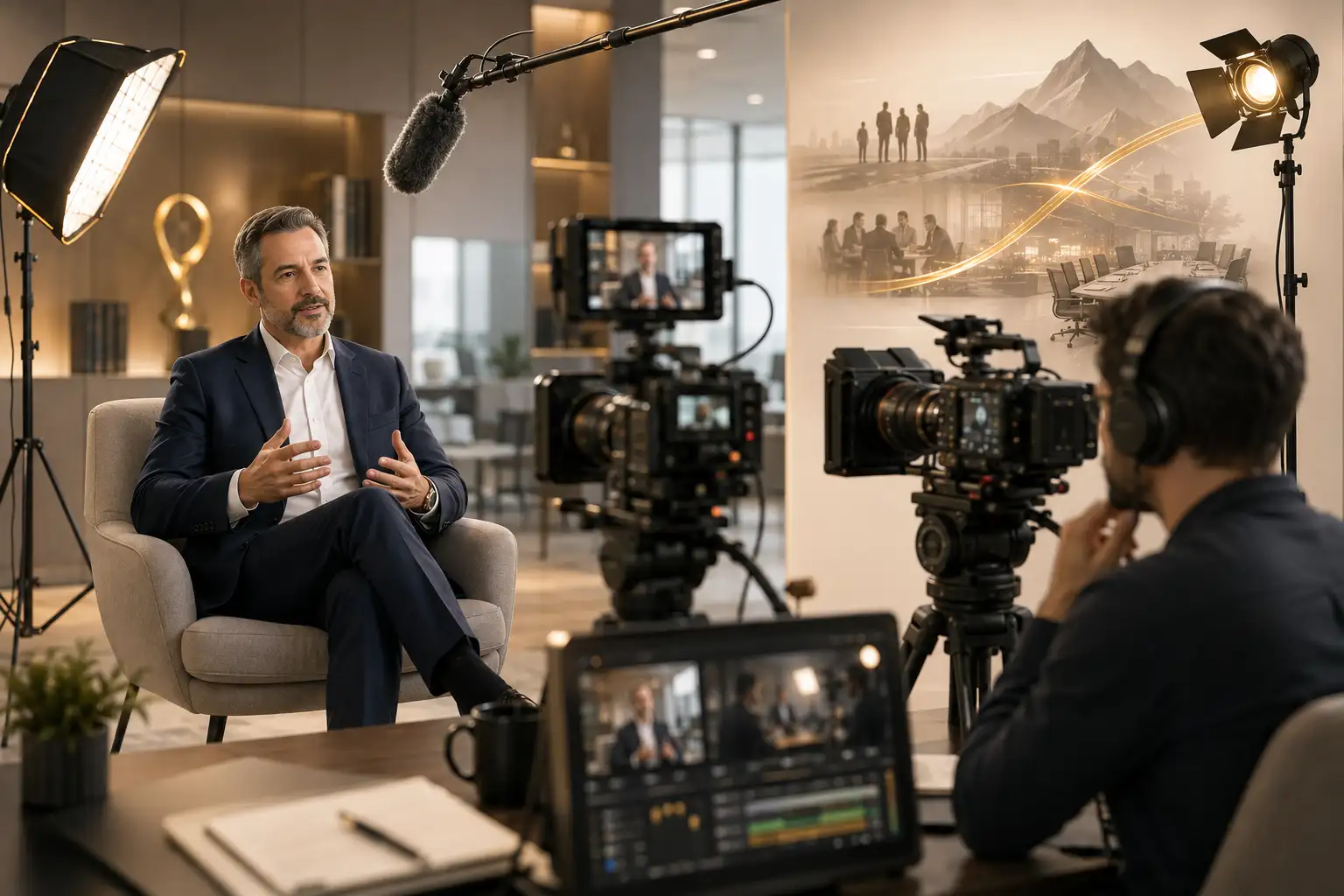
Executive, founder and employee interviews planned around clear business communication goals.
Operational Storytelling
Corporate documentaries can show how an organization works, who contributes to its services and how its facilities, processes and teams support customers. Filming plans should respect safety, operational continuity, confidential information and location restrictions.
Industrial filming depends on access, safety requirements, operational schedules, participant permissions and restrictions on confidential processes or information.
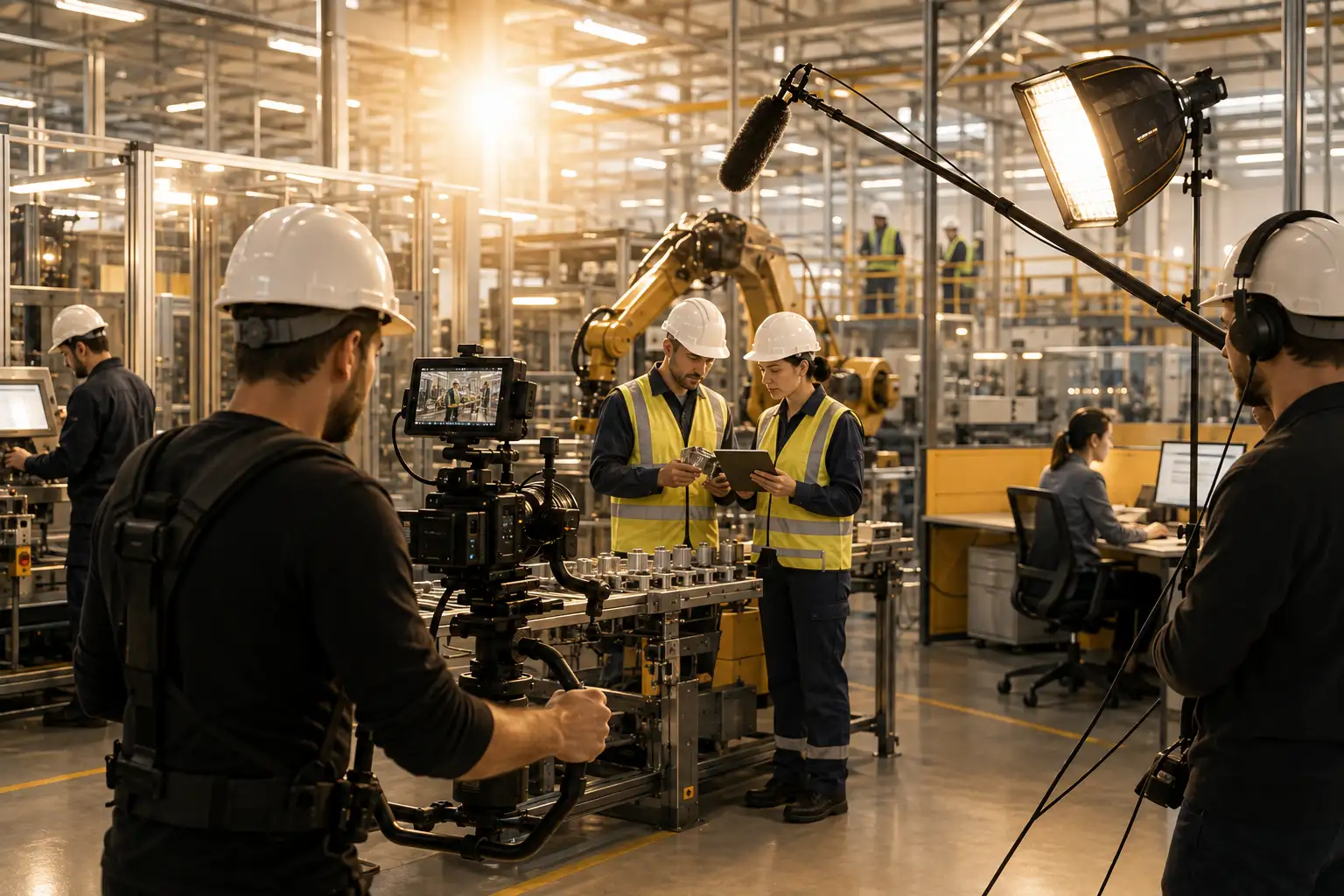
Industrial and workplace filming can document people, processes, capabilities and company culture.
Pre-Production
Pre-production helps clarify what must be filmed, who should participate, what facts require client confirmation and how the final content will be reviewed.
Filming
Drone work depends on location, weather, permissions, aviation requirements and operational safety.
Post-Production
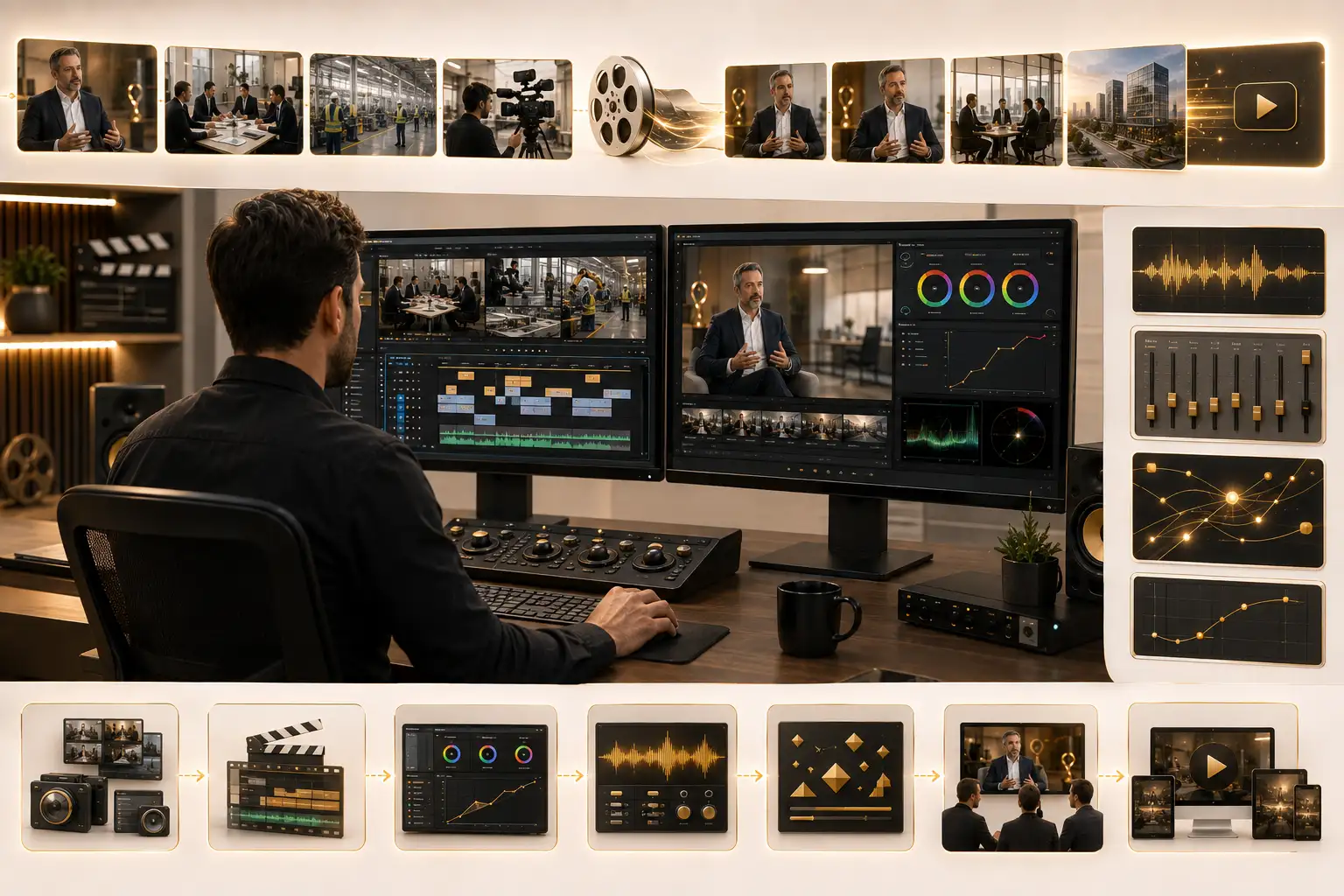
Post-production brings together narrative editing, color, sound, graphics, captions and delivery versions.
Review and Revisions
Revision quantity, scope and turnaround should be defined in the project agreement. New scenes, reshoots or major narrative changes may require additional production work.
Final Delivery
Delivery formats, usage rights, raw footage, source files and licensed assets should be documented in the written project agreement.
Structured Production
Step 1
Define the purpose, audience, intended platforms, locations, participants, deliverables and approval responsibilities.
Step 2
Clarify what viewers should understand, remember or do after watching the video.
Step 3
Review company information, history, services, operations, available evidence and potential narrative themes.
Step 4
Prepare narrative direction, interview topics, questions, voice-over requirements and factual review points.
Step 5
Plan scenes, interviews, locations, supporting footage, graphics and transitions.
Step 6
Assess access, safety, lighting, sound, permissions, operational timing and participant availability.
Step 7
Record interviews, workplace activity, products, facilities, events and approved supporting footage.
Step 8
Select footage, structure the story, refine pacing and prepare the first review version.
Step 9
Apply color correction, grading, audio cleanup, mixing and suitable licensed music.
Step 10
Add approved titles, diagrams, lower thirds, subtitles, captions and brand-consistent visual elements.
Step 11
Collect consolidated feedback, complete agreed revision rounds and confirm final approval.
Step 12
Prepare approved master files and versions for websites, presentations, events and supported social platforms.
Business Communication
Combines interviews, processes, locations and graphics into a structured explanation.
Records approved leadership perspectives, milestones, archives and organizational development.
Connects purpose, people, operations and customer relevance through one coherent narrative.
Provides a professional format for leadership messages, strategic updates and company introductions.
Helps present workplace culture, employee experiences, facilities and approved career information.
Approved footage may support websites, presentations, events and shorter platform versions.
Video performance depends on content quality, distribution, audience, platform, promotion and business context. Audience growth, sales, engagement, publicity and campaign performance cannot be guaranteed.
Industries
Factories, processes, quality systems, people, safety practices and export capabilities.
Warehouses, fleets, supply chains, branch operations and customer-service processes.
Programs, campuses, research, student experiences, faculty and institutional history.
Facilities, services, professional teams and approved patient-facing or internal communication.
Products, software, implementation processes, teams, customer use cases and technical capabilities.
Expertise, methodology, leadership, client experience and business values.
Production capabilities, compliance processes, logistics, markets and international communication.
Branches, teams, regional operations, consistent culture and centralized brand communication.
Why NUR Technology Solutions
Related Services
Frequently Asked Questions
A corporate documentary is a professionally planned business film that may combine interviews, workplace footage, company history, archival material, narration and operational scenes to explain an organization, its people, capabilities or development.
A corporate documentary usually provides deeper context, history and human perspectives, while a promotional video is commonly shorter and more focused on a specific product, service, campaign or call to action.
Projects may include company profiles, corporate documentaries, brand stories, executive interviews, industrial videos, employee stories, event coverage, recruitment videos, training content, testimonials and product or process videos.
Yes. Executive interviews can be planned around leadership messages, company history, strategy, culture, annual communications or specific business topics.
Yes, subject to location access, safety requirements, operational schedules, permissions and any restrictions that apply to the facility.
Yes. A company-profile video may present the organization, people, locations, services, products, capabilities, history and future direction.
Yes. Recruitment videos may present workplace culture, employee perspectives, facilities, values and approved career information.
Yes. Event coverage may include conferences, launches, exhibitions, seminars, ceremonies, management meetings and internal events.
Scriptwriting and narrative planning may be included according to the agreed project scope, source material and approval process.
Yes. Storyboards or structured shot plans can be prepared where they help communicate scenes, camera coverage, interviews, graphics and transitions.
Yes. Subtitles and captions can be prepared for approved languages, subject to translation accuracy, review and delivery requirements.
Yes. Multilingual versions may include translated scripts, subtitles, captions, graphics or voice-over, depending on the project scope and approved translations.
Drone filming may be considered where legally permitted and operationally suitable. It depends on location, weather, permissions, aviation requirements and safety conditions.
Timelines depend on research, script approvals, locations, filming days, participant availability, travel, graphics, revision rounds and final delivery requirements.
The number and scope of revision rounds should be defined in the project agreement. Consolidated feedback helps keep the review process clear and efficient.
Usage rights, ownership, source files, raw footage, licensed assets and third-party components should be defined in the written project agreement.
Yes. Approved versions can be prepared for websites, presentations, events and supported social platforms, subject to format, duration and licensing requirements.
Cost may be affected by research, script development, locations, crew size, filming days, travel, equipment, interview count, graphics, music, voice-over, revisions and delivery versions.
The client may need to provide verified company facts, brand guidelines, access permissions, participant availability, locations, historical material, approval contacts and intended delivery requirements.
Yes, subject to footage quality, format, ownership, licensing, completeness and the feasibility of creating a coherent final video from the available material.