Enterprise Business Applications
Centralized software for departments, branches, users, transactions, records, approvals and management reporting.
Software Built Around You
NUR Technology Solutions provides custom software development services for organizations that need applications designed around their workflows, users, data, reporting and long-term operational requirements. We develop web, mobile and enterprise systems that can connect departments, branches and existing business applications through a structured digital environment.
NUR Technology Solutions develops custom software applications that align with your business processes, users, data, integrations and long-term operational requirements—with source-code and database ownership options.
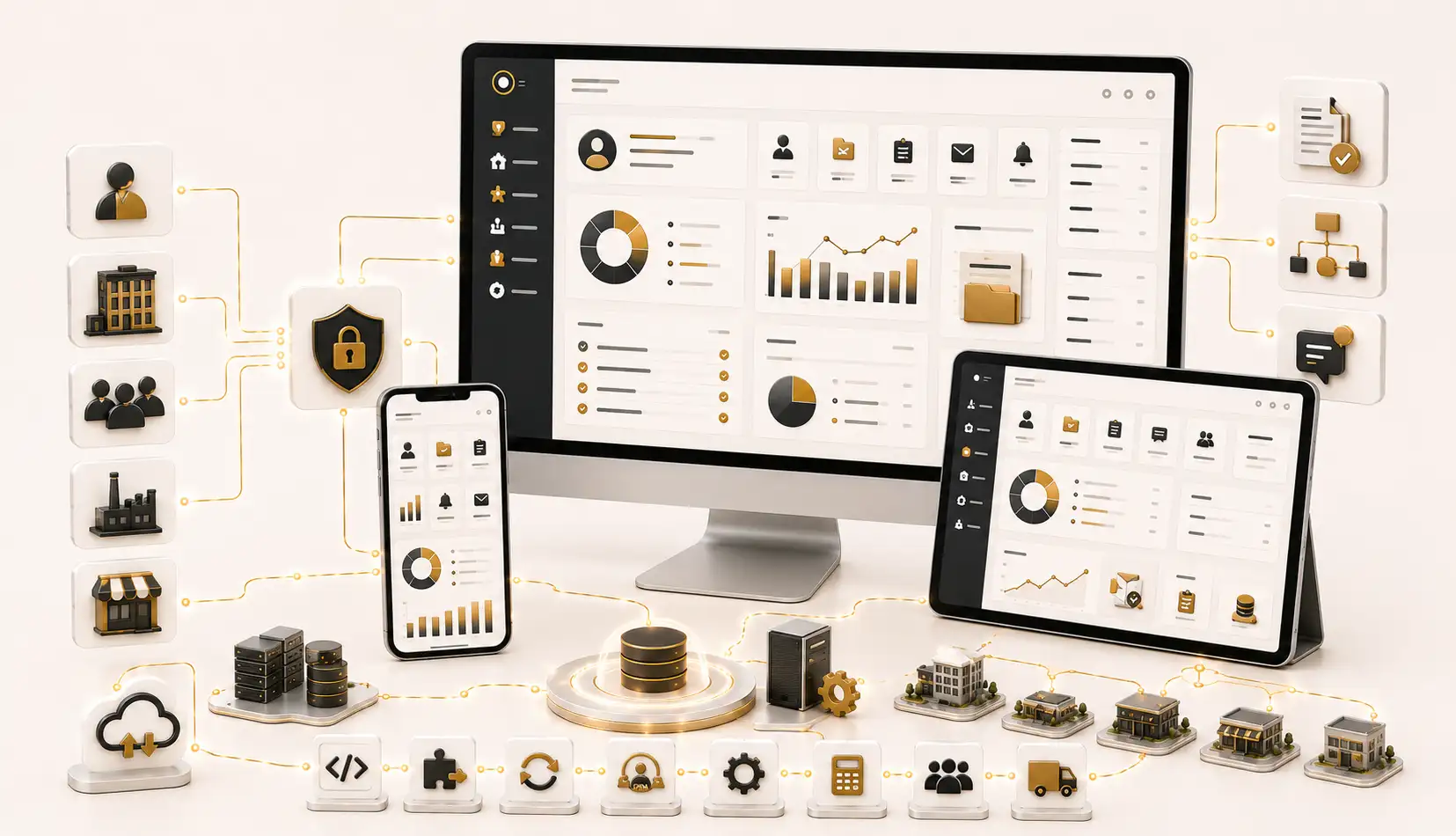
Custom enterprise software connecting users, workflows, data, reports and business systems.
Purpose-Built Business Software
Custom software development is the process of designing and building software for the specific users, workflows, data structures and reporting requirements of an organization. Unlike fixed off-the-shelf applications, custom software can reflect an organization’s terminology, approval levels, branch structure, user roles and operating procedures.
Organizations commonly commission custom systems when generic products require too many workarounds, cannot connect with existing applications or do not support specialized processes. Exact functionality depends on requirements, infrastructure, available data and integration methods.
Recognize the Need
Generic software can work effectively for standard requirements. Custom software becomes relevant when processes, reporting structures, user roles or integrations cannot be handled efficiently through fixed applications.
Software Categories
Centralized software for departments, branches, users, transactions, records, approvals and management reporting.
Role-based applications for requests, tasks, documents, assets, approvals and routine business activities.
Responsive browser-based systems for desktop, tablet and mobile access.
Secure portals for customers, dealers, vendors, partners or members.
Structured request submission, task assignment, approvals, escalation, notifications and status tracking.
Systems for leads, customers, field teams, territories, orders, distributors, collections and reporting.
Learning systems, examinations, student portals, academic workflows and reporting.
Configurable systems for appointments, authorized records, billing workflows and administration.
Dashboards, comparisons, summaries and downloadable operational reports.
Role-specific mobile access for field teams, customers, employees and managers.
Enterprise Applications
Custom enterprise software can connect departments, branches, companies and management teams through one structured operational environment. Each user may receive dashboards, records and actions according to their role, department, branch or management level.
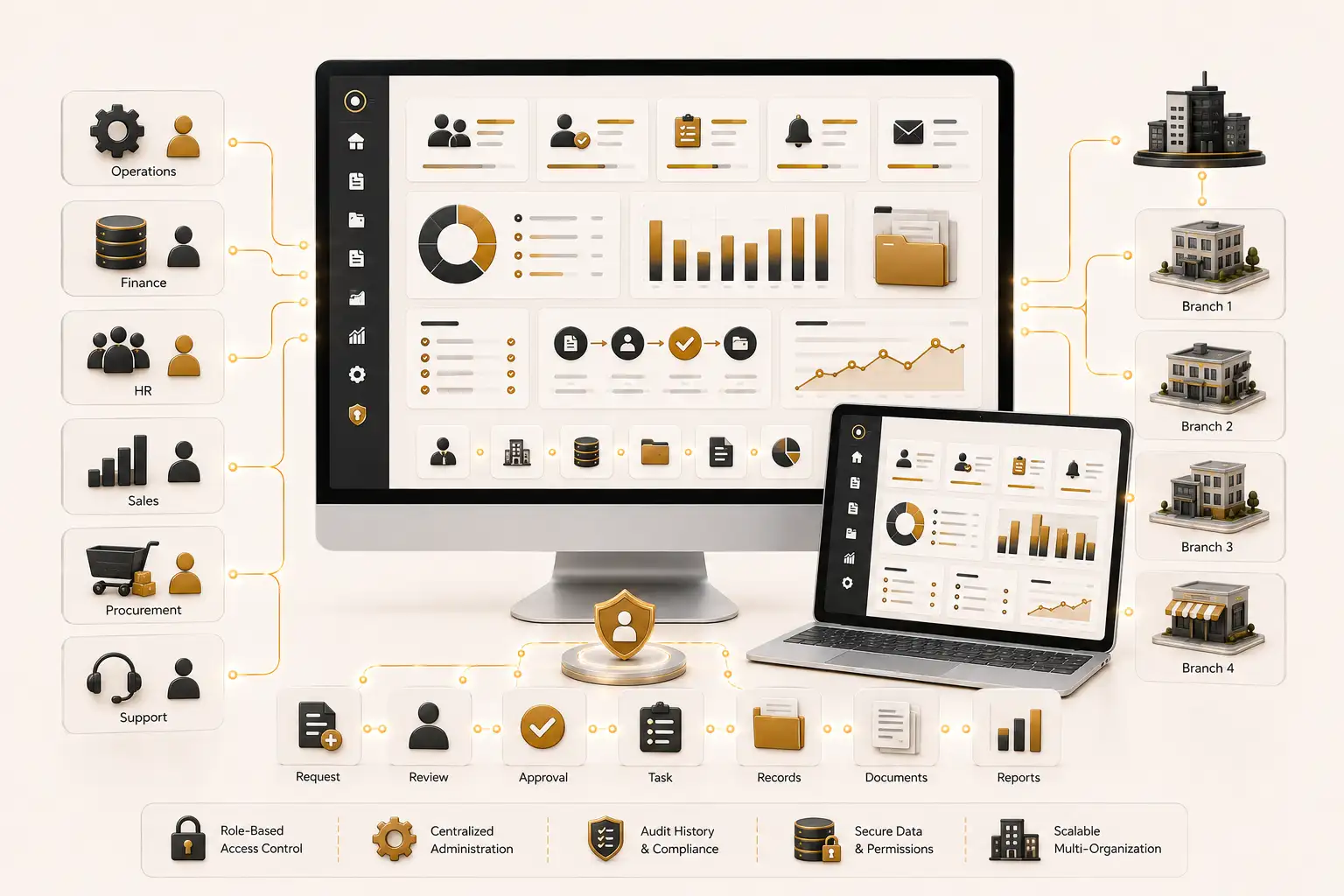
Centralized enterprise applications for departments, branches, workflows and reporting.
Workflow Automation
Custom workflow management software can help organizations standardize processes that currently depend on emails, spreadsheets, telephone calls or paper forms.
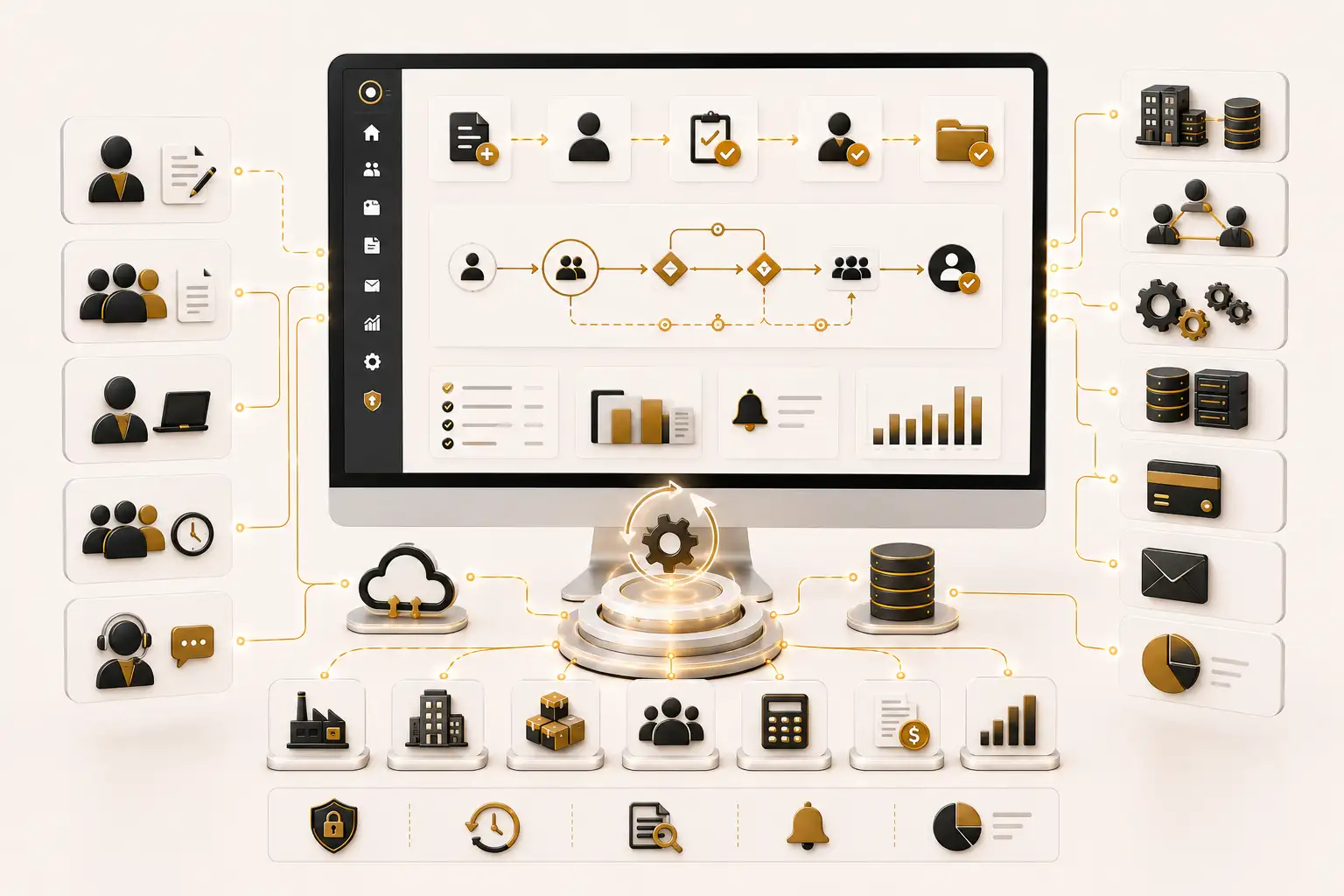
Configurable workflows connected with approved enterprise systems and APIs.
Web and Mobile
Offline operation, local data storage and device-specific features depend on project requirements, data sensitivity and technical feasibility.
System Connectivity
Integration feasibility depends on technical documentation, API availability, licensing conditions, security requirements and access permissions provided by the connected system.
Data Foundation
Not all legacy data can always be transferred without changes. Migration feasibility depends on data quality, structure, completeness, relationships and source-system access.
Management Information
Real-time or near-real-time reporting depends on data-entry practices, synchronization schedules and connected-system capabilities.
Modernization
Legacy applications may create compatibility problems, reporting limitations, maintenance difficulties and dependence on obsolete technologies. NUR Technology Solutions can assess the existing system and recommend an appropriate modernization approach.
The modernization strategy depends on the condition, documentation, technology, data quality and accessibility of the existing application.
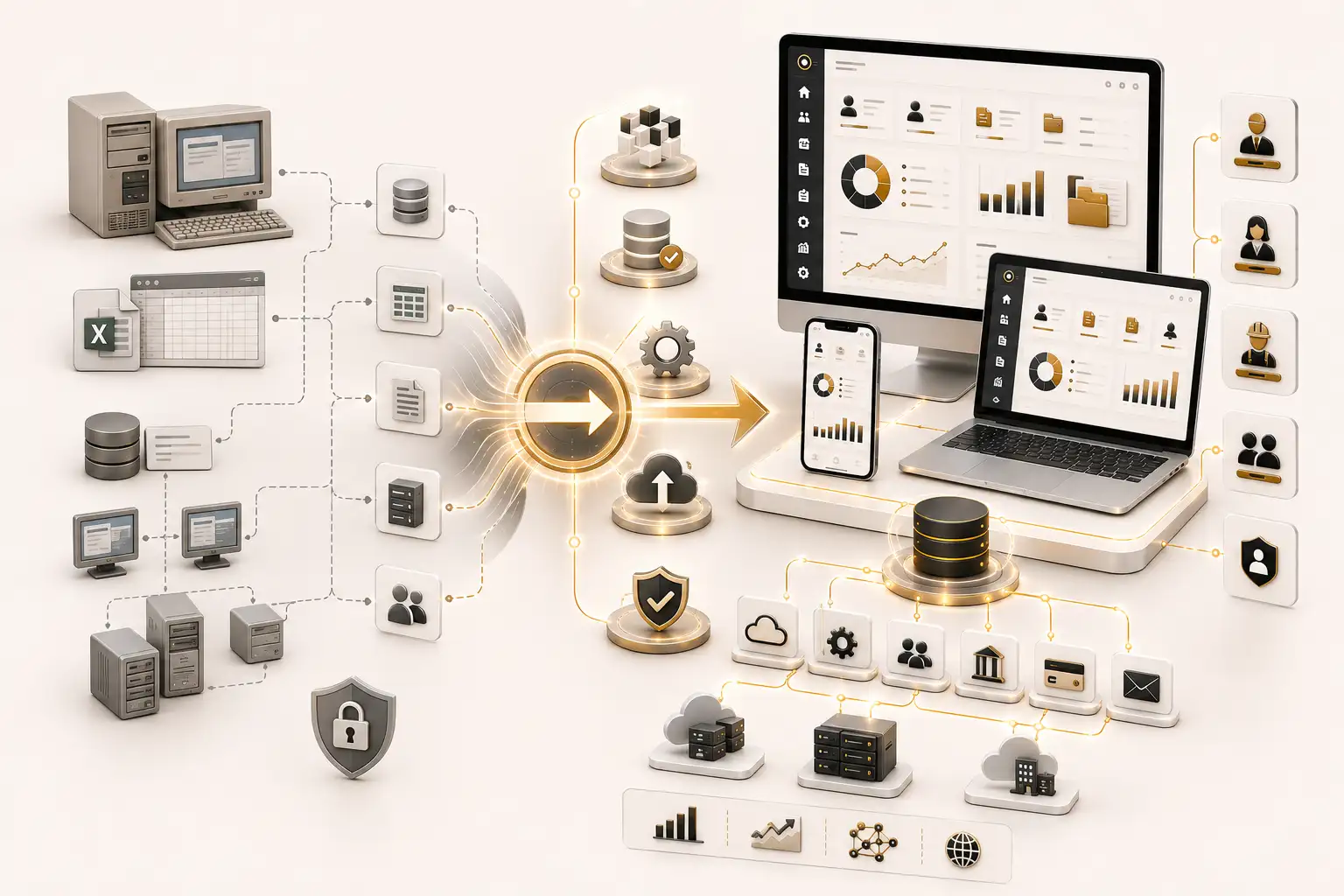
A phased path from outdated systems to modern, scalable software architecture.
Access Control
The appropriate security model depends on users, data sensitivity, hosting, regulatory obligations and connected applications.
Ownership Options
Source-code and database ownership are provided according to the agreed contract, project scope and applicable third-party licensing terms.
Deployment Options
Distributed Operations
Structured Delivery
Step 1
Review workflows, users, departments, branches, documents, current applications, challenges and reporting requirements.
Step 2
Translate business requirements into modules, user roles, forms, approval stages, rules and expected outputs.
Step 3
Plan application architecture, database structure, integrations, hosting, security and development priorities.
Step 4
Design interfaces around the responsibilities of employees, customers, managers, partners and administrators.
Step 5
Develop approved modules, workflows, dashboards and integration components.
Step 6
Test functions, permissions, workflows, integrations, responsive behavior and expected business use.
Step 7
Prepare and migrate approved data where applicable, then deploy to the agreed environment.
Step 8
Provide relevant training, process guidance and documentation according to project scope.
Step 9
Provide maintenance, issue resolution and additional modules under an agreed support arrangement.
Business Value
The application is designed around approved workflows rather than forcing teams into unsuitable fixed processes.
Connected workflows can reduce repeated data entry and fragmented record keeping.
Authorized information can be organized within one structured application.
Forms, approvals, responsibilities and status stages can be defined consistently.
Managers can receive reports designed around operational requirements.
Custom software can connect with approved ERP, CRM, finance, HR and third-party applications.
Users can receive appropriate information and functions according to their responsibilities.
The application can be reviewed and enhanced as operational requirements change.
The architecture may support additional users, branches, workflows, reports and modules.
Agreed ownership and hosting arrangements may provide greater control than closed platforms.
Why NUR Technology Solutions
Connected Services
Industries
Operations, approvals, inventory visibility, distribution and reporting.
Dealers, customers, orders, warehouses, collections and product activity.
Multi-branch users, transactions, inventory, requests and reporting.
Appointments, authorized records, documents and administration.
Learning systems, student applications, examinations and portals.
Clients, projects, documents, tasks and approvals.
Requests, assignments, operational records and reporting.
Branches, services, employees, customers and management information.
Requests, records, approvals and controlled reporting.
Centralized systems for multiple locations, departments and companies.
Frequently Asked Questions
Custom software development is the process of creating software for an organization’s specific workflows, users, data, integrations and reporting requirements. Unlike a standard product, the application is designed around the organization’s operational needs.
A business may consider custom software when spreadsheets, disconnected applications, manual processes or fixed subscription products cannot support its workflows, approvals, integrations or reporting requirements effectively.
Off-the-shelf software provides standardized functions for a broad market. Custom software is designed around specific users, workflows, data structures and business rules.
Integration may be possible where suitable APIs, technical documentation, licensing rights and access permissions are available. Feasibility should be assessed before the integration scope is confirmed.
Existing data may be migrated when it is accessible and suitable for transfer. Migration depends on the information’s format, quality, structure, completeness and relationships.
Yes. Custom software can be designed to support branches, companies, regions, departments or warehouses while maintaining appropriate permissions and centralized reporting.
Yes. A solution may include a responsive web application, mobile application or both. The recommended approach depends on user requirements, workflows and technical scope.
Yes. Workflows may be configured according to request type, department, branch, user role, transaction amount or management level.
Yes. Custom reports and dashboards can be designed around approved business data. Report availability and timing depend on the quality and accessibility of the underlying information.
Client-controlled hosting or on-premise deployment may be considered where suitable. Infrastructure, backups, monitoring and maintenance responsibilities should be agreed before implementation.
Source-code and database ownership options may be provided according to the agreed contract, project scope and applicable third-party licensing terms.
The schedule depends on modules, workflow complexity, integrations, data migration, testing requirements and stakeholder availability. A timeline can be estimated after discovery and scope definition.
Yes. An existing application may be redesigned, re-engineered, integrated or replaced in phases, depending on its technology, documentation, data and current condition.
Maintenance and support may be provided under an agreed service arrangement, including issue resolution, updates and future enhancements.
A well-planned architecture can support additional users, modules, reports, integrations or branches, subject to technical review.